Understanding Anti-Obesity Medications: A Guide to Treatment Options, Access, and Hope for the Future
Key Takeaways
1. The Game Has Changed (It's a Disease, Not a Willpower Problem)
Obesity is a serious chronic disease, and we finally have real medical treatments for it.
The days of just being told "eat less, move more" are fading. Insurance and policy are finally catching up.
2. GLP-1s are the Superstars
Semaglutide (Wegovy): This is the heart hero! It's the only one proven to lower the risk of heart attacks and strokes. It’s also the go-to for knee pain (osteoarthritis).
New in 2026: They approved the Wegovy Pill in December 2025! Same great results as the shot (~17% weight loss) but it's cheaper ($149-$299/month).
Tirzepatide (Zepbound): This is the strongest weight loss med out there, averaging a massive 22.5% loss. It's the best choice for people with certain types of heart failure (HFpEF) and severe sleep apnea.
Liraglutide (Saxenda): The original GLP-1. Still a solid option, especially for preventing diabetes and if you have diabetes-related heart issues.
3. Matching the Med to the Problem (It's Personal!)
Don't just pick the one that makes you lose the most. Your doctor should choose the one that helps your other health problems:
Heart Disease (ASCVD): Go with Semaglutide.
Heart Failure (HFpEF) or Sleep Apnea: Go with Tirzepatide.
Knee Pain: Go with Semaglutide.
Type 2 Diabetes: Any GLP-1 is great because they help with both weight and blood sugar.
4. Awesome News on Access (2026 is Huge!)
Medicare Coverage is ON: Starting in 2026, Medicare will cover Tirzepatide (Spring 2026) and Semaglutide (Later 2026) for eligible people.
The Cost: A sweet $50 copay per month! That's a tiny fraction of the usual cost.
How to Get It (If Insurance Sucks): You can often buy them directly from the manufacturer's pharmacy for much less than the list price:
Wegovy Pill: $149-$299/month
Zepbound: $299-$499/month
Qsymia (pill combo): ~$98/month
5. Dealing with Side Effects
The Big One: Nausea, along with common stomach issues (diarrhea, constipation, vomiting).
The Golden Rule: Start Low and Go Slow! Never rush the dose increases—that's the best way to avoid feeling awful.
Diet Fixes: Avoid fatty, greasy, and sugary foods. Eat small, frequent, bland meals when nauseous. Stay hydrated!
6. Don't Forget Your Muscles!
When you lose weight fast, you can lose muscle.
REQUIRED ACTION: You must do resistance/strength training to keep your muscle mass. Walking is fine, but lift something heavy too!
Introduction: A New Era in Obesity Treatment
Obesity is a serious, chronic disease that affects millions of Americans, contributing to conditions like heart disease, diabetes, liver disease, and sleep apnea. For too long, people living with obesity have faced limited treatment options and significant barriers to accessing effective medications. But we are entering a new era—one marked by breakthrough medications, expanding insurance coverage, and growing recognition that obesity requires medical treatment, not just willpower.
This white paper provides a comprehensive overview of FDA-approved anti-obesity medications, their unique benefits for different health conditions, how to access them, and exciting developments that will improve availability in 2026. Whether you’re a patient exploring treatment options, a healthcare provider, or a policymaker working to improve access to care, this guide offers evidence-based information to support informed decision-making.
The Medications: Individualized Treatment for Your Health Needs
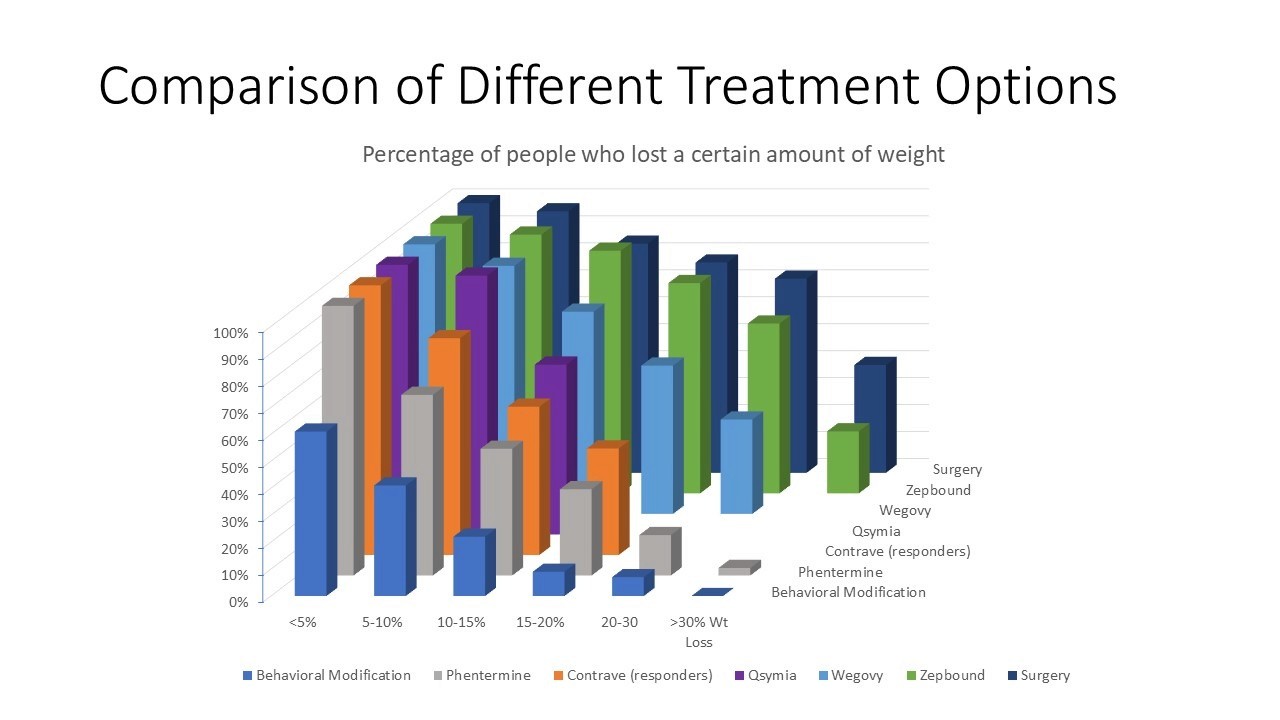
Each medication has unique properties that determine how effective it is. This graph shows a visual representation of the percentage of people that can reach a certain percentage of body weight loss. The average numbers referred to below refer to when 50% of people can reach a certain weight loss goal.
GLP-1 Receptor Agonists: The Game-Changers
GLP-1 (glucagon-like peptide-1) receptor agonists work by mimicking a natural hormone that regulates appetite and blood sugar. These medications have revolutionized obesity treatment with their powerful weight loss effects and additional health benefits.
Semaglutide (Wegovy®)
What makes it special: Semaglutide is the only anti-obesity medication proven to reduce the risk of heart attacks, strokes, and cardiovascular death in people with established heart disease and obesity. It’s also the preferred medication for people with obesity and knee osteoarthritis.
Specific benefits for:
Cardiovascular disease prevention: Proven to prevent major adverse cardiovascular events (MACE)
Type 2 diabetes: Improves blood sugar control through weight loss and incretin effects
Hypertension: Reduces blood pressure along with weight loss
Liver disease (MASLD/MASH): Shows benefits in clinical trials
Obstructive sleep apnea: Improves breathing during sleep
Knee osteoarthritis: Reduces joint pain and improves mobility
How to get it:
Injectable form: Available now through NovoCare pharmacy
First two months: $199/month
Subsequent months: $349/month
Pill form (NEW - Approved December 22, 2025): The first oral GLP-1 for weight loss
Lower doses (1.5 mg, 4 mg): $149/month
Higher doses (9 mg, 25 mg): $299/month
Same efficacy as injection: Average weight loss of ~17% if all patients stay on treatment, ~14% regardless of treatment continuation
More affordable: Less expensive than injection, with robust supply manufactured in the US
Medicare coverage starting later in 2026: $50 copay for eligible patients
To check your insurance coverage: Visit wegovy.com/coverage-and-savings or call your pharmacy benefits department.
Tirzepatide (Zepbound®)
What makes it special: Tirzepatide is a dual GIP/GLP-1 receptor agonist, making it the most potent weight loss medication currently available. It’s the preferred medication for people with obesity and heart failure with preserved ejection fraction (HFpEF) or obstructive sleep apnea.
Specific benefits for:
Heart failure with preserved ejection fraction (HFpEF): PREFERRED medication—improves heart function and exercise capacity
Obstructive sleep apnea: PREFERRED medication—significantly improves breathing during sleep
Type 2 diabetes: Powerful blood sugar control through weight loss and incretin effects
Hypertension: Reduces blood pressure along with weight loss
Liver disease (MASLD/MASH): Shows significant benefits in clinical trials
Cardiovascular disease: Evidence pending in clinical trials
Weight loss results: Average 22.5% weight loss over 72 weeks—the highest among all anti-obesity medications.
How to get it:
Lilly Direct Pharmacy pricing: 2.5 mg dose: $299/month, 5 mg dose: $399/month, Higher doses (vial form): $499/month
Medicare coverage starting Spring 2026: $50 copay for eligible patients
To check your insurance coverage: Visit zepbound.lilly.com/coverage-savings or log into your insurance portal.
Liraglutide (Saxenda®)
What makes it special: Liraglutide was the first GLP-1 approved for obesity treatment and has proven cardiovascular benefits in people with type 2 diabetes.
Specific benefits for:
Type 2 diabetes with cardiovascular disease: Proven to prevent heart attacks and strokes in this population
Diabetes prevention: Prevents progression from prediabetes to diabetes
Hypertension: Reduces blood pressure along with weight loss
Liver disease (MASLD/MASH): Shows benefits in clinical trials
Weight loss results: Average 9.2% weight loss over 52 weeks.
How to get it: Available through standard pharmacy channels; check with your insurance for coverage details.
Combination Medications: Dual-Action Approaches
Phentermine/Topiramate ER (Qsymia®)
What makes it special: This combination medication works through appetite suppression and metabolic effects, offering an oral option with significant weight loss.
Specific benefits for:
Type 2 diabetes: Improves blood sugar through weight loss
Hypertension: Reduces blood pressure (clinical trials show significant BP reduction)
Liver disease (MASLD): Benefits through weight loss
Diabetes prevention: Reduces risk through weight loss
Weight loss results: Average 9.6-9.9% weight loss over 52 weeks.
How to get it:
Direct-order option (MedVantx): $98/month plus shipping
Cost-saving tip: Consider 3-month supply for lower costs
To check your insurance coverage: Visit qsymia.com/patient/multiple-ways-to-save
Important notes:
Monitor for kidney stones (calcium phosphate)
Dose adjustment needed for kidney or liver impairment
Contraindicated in uncontrolled hypertension, pregnancy
Naltrexone ER/Bupropion ER (Contrave®)
What makes it special: This combination affects brain pathways that control appetite and reward, offering an alternative for patients who prefer oral medication.
Specific benefits for:
Type 2 diabetes: Improves blood sugar through weight loss
Hypertension: Benefits through weight loss (but contraindicated if uncontrolled)
Liver disease (MASLD): Benefits through weight loss
Diabetes prevention: Reduces risk through weight loss
Weight loss results: Average 4.2-5.2% weight loss over 52 weeks (dose-dependent).
How to get it:
Ridgeway Pharmacy direct order: $99 with free shipping (if not covered by insurance)
Savings card: If insurance-covered, can reduce cost to as low as $20 if eligible
Important notes:
Contraindicated in uncontrolled hypertension, seizure disorders, eating disorders, chronic opioid use
Monitor heart rate and blood pressure regularly
Single-Agent Medications
Phentermine
What makes it special: As a generic medication, phentermine is more affordable and has decades of use in weight management.
Specific benefits for: - Type 2 diabetes: Benefits through weight loss - Diabetes prevention: Reduces risk through weight loss - Liver disease (MASLD): Benefits through weight loss
Weight loss results: Average 5-6% weight loss over 28 weeks.
Important notes: - Contraindicated in cardiovascular disease and uncontrolled hypertension - Monitor heart rate and blood pressure - Generally more affordable due to generic availability
Orlistat
What makes it special: Works differently from other medications by blocking fat absorption in the intestines. Available over-the-counter and by prescription.
Specific benefits for: - Type 2 diabetes: Benefits through weight loss - Hypertension: Benefits through weight loss - Cardiovascular disease: Benefits through weight loss - Liver disease (MASLD): Benefits through weight loss - Diabetes prevention: Reduces risk through weight loss
Weight loss results: Average 4% weight loss over 52 weeks.
How to take it: 120 mg three times daily before meals.
Important notes: - May cause gastrointestinal side effects (flatulence, oily stools) - Can interfere with absorption of fat-soluble vitamins—supplementation recommended - Monitor for gallstones
Beyond Weight Loss–Matching Medication to Your Medical Conditions
The AACE Algorithm provides evidence-based guidance for selecting the right medication based on your specific health conditions. Here’s how healthcare providers use this approach to individualize your treatment:
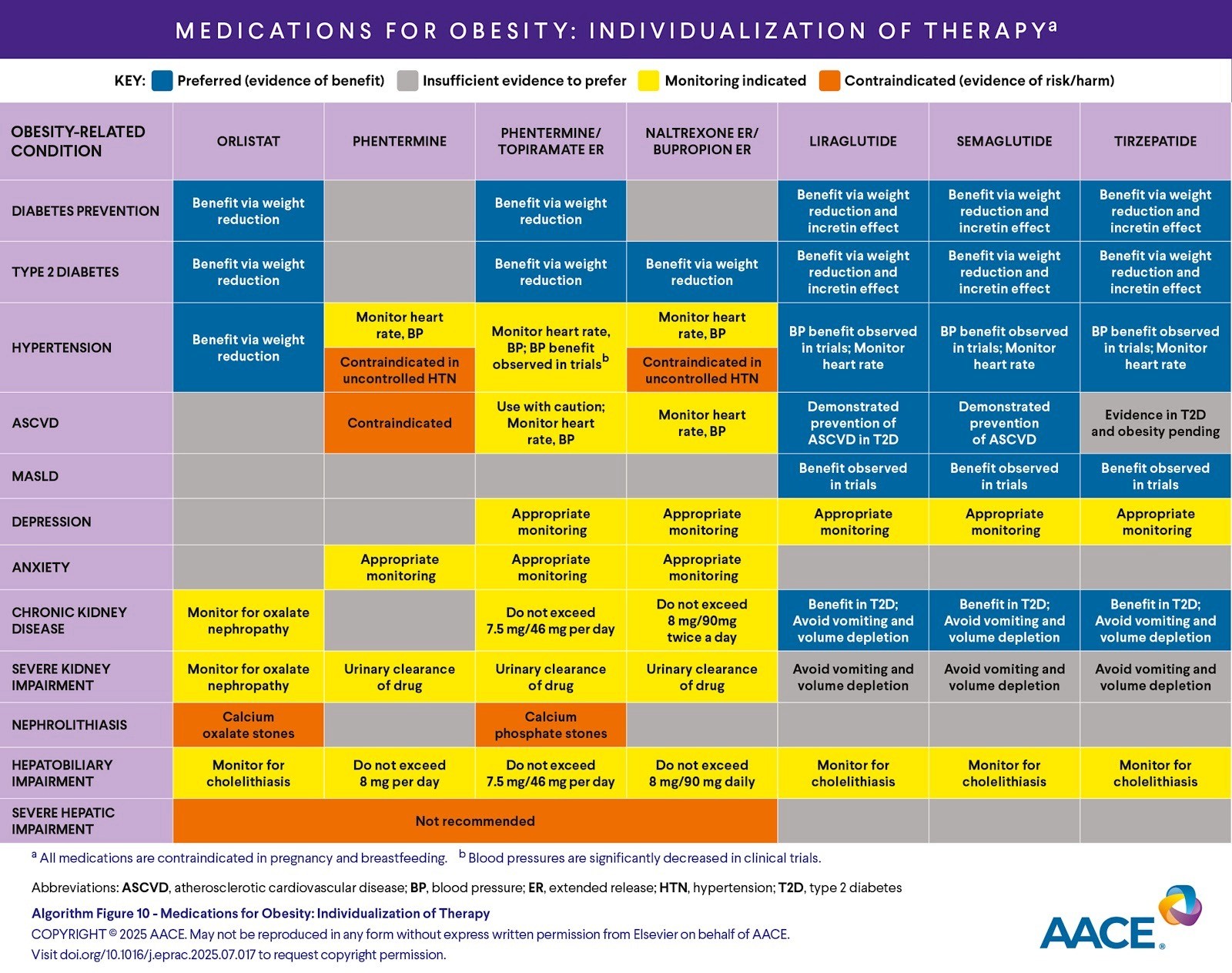
If you have heart disease (ASCVD):
BEST CHOICE: Semaglutide (proven to prevent heart attacks and strokes)
ALSO EFFECTIVE: Liraglutide (proven in people with diabetes), tirzepatide (evidence pending)
AVOID: Phentermine (contraindicated)
If you have heart failure with preserved ejection fraction (HFpEF):
PREFERRED: Tirzepatide (specifically shown to improve heart function)
If you have obstructive sleep apnea:
PREFERRED: Tirzepatide (most effective for improving breathing)
ALSO EFFECTIVE: Semaglutide
If you have knee osteoarthritis:
PREFERRED: Semaglutide (reduces joint pain and improves mobility)
If you have type 2 diabetes:
BEST CHOICES: GLP-1 medications (semaglutide, liraglutide, tirzepatide) provide both weight loss AND blood sugar control
ALSO EFFECTIVE: All other medications help through weight loss alone
If you have high blood pressure (hypertension):
BEST CHOICES: Phentermine/topiramate ER, GLP-1 medications (all show blood pressure reduction in trials)
MONITOR CAREFULLY: Phentermine, naltrexone/bupropion (require BP monitoring)
AVOID: Phentermine and naltrexone/bupropion if hypertension is uncontrolled
If you have liver disease (MASLD/MASH):
BEST CHOICES: GLP-1 medications (semaglutide, liraglutide, tirzepatide) show specific benefits in trials. Only semaglutide is FDA approved for MASH.
ALSO EFFECTIVE: All other medications help through weight loss
If you have kidney disease:
BEST CHOICES: GLP-1 medications (proven kidney benefits in people with diabetes)
DOSE ADJUSTMENTS NEEDED: Phentermine/topiramate ER, naltrexone/bupropion ER
Key Principle: The goal isn’t just weight loss—it’s improving your overall health and quality of life by selecting the medication that addresses your specific medical needs.
Exciting News: Medicare Coverage Begins in 2026
For the first time in history, Medicare will cover anti-obesity medications for eligible beneficiaries. This represents a major policy breakthrough that will help millions of Americans access life-changing treatment.
What’s Covered:
Starting Spring 2026: - Tirzepatide (Zepbound®) for weight management
Starting Later in 2026: - Semaglutide (Wegovy®) for weight management - Future consideration: Coverage for Wegovy in liver disease patients (FDA-approved August 2025)
Continued coverage: - Diabetes medications (Ozempic, Mounjaro) remain covered for diabetes indications
Who Qualifies:
Medicare will cover these medications for people with obesity AND additional health complications:
BMI ≥ 27 with prediabetes OR cardiovascular disease (heart attack, stroke, peripheral vascular disease)
BMI ≥ 30 with uncontrolled hypertension, kidney disease, OR heart failure
BMI > 35 regardless of other conditions
What It Costs:
Patient copay: $50 per month (compared to typical costs of $300-500/month without coverage)
This represents a fraction of the current out-of-pocket costs
Why This Matters:
The Medicare pilot program recognizes that obesity with medical complications requires treatment, not just lifestyle advice. By making these medications affordable, Medicare is removing a major barrier to care and giving people the tools they need to improve their health and prevent serious complications.
How to Access These Medications: A Practical Guide
Step 1: Talk to Your Healthcare Provider
Discuss your weight, health conditions, and treatment goals. Your provider will help select the medication that best matches your medical needs based on your co-existing medical conditions.
Step 2: Check Your Insurance Coverage
For private insurance: 1. Log into your insurance company’s online portal 2. Call your pharmacy benefits department 3. Use manufacturer websites (links provided above for each medication)
Questions to ask your insurer: - Is the medication covered for obesity treatment (not just diabetes)? - Is prior authorization required? - What are my estimated monthly costs (copays and deductibles)? - Are there differences between 30-day and 90-day prescriptions? - Can I use manufacturer savings cards? (Note: Medicare patients cannot use savings cards)
For Medicare beneficiaries (starting 2026): - Coverage will be automatic for eligible patients meeting BMI and comorbidity criteria - $50 copay—no need for savings cards - Check with your Medicare plan for specific details when coverage begins.
Step 3: Explore Direct-Purchase Options
If your insurance doesn’t cover your medication or costs are too high: - Semaglutide (Wegovy) pill: $149-299/month through NovoCare pharmacy - Tirzepatide (Zepbound): $299-499/month through Lilly Direct pharmacy - Phentermine/topiramate ER (Qsymia): $98/month through MedVantx - Naltrexone/bupropion ER (Contrave): $99/month through Ridgeway Pharmacy.
Step 4: Use Manufacturer Savings Programs
Most manufacturers offer savings cards or patient assistance programs. Visit their websites or ask your pharmacist about available programs.
Important Note About Pricing:
All prices listed in this white paper are accurate as of January 4, 2026, and are subject to change. Always verify current pricing with pharmacies and manufacturers before starting treatment.
Managing Side Effects: What to Expect and How to Cope
Many patients experience side effects from these medications, especially in the first few weeks of treatment. The good news is that most side effects are manageable and decrease over time.
Common Side Effects (Especially GLP-1 Medications):
Nausea (most common)
Diarrhea
Constipation
Vomiting
Abdominal discomfort
Headache
Fatigue
Why they occur: These medications slow stomach emptying and affect brain regions that control appetite and nausea.
Key Strategies to Minimize Side Effects:
Start Low and Go Slow (Most Important!): All medications use gradual dose escalation to build tolerance. Never skip this step—it’s the most effective way to prevent side effects.
Modify Your Eating Habits:: Eat small portions and chew slowly. Eat more frequently (smaller, more frequent meals). Avoid lying down immediately after eating. Keep a food diary to identify trigger foods.
Choose the Right Foods: AVOID: - High-fat, greasy foods - Spicy foods - Sugary foods and drinks - Canned foods - Coffee and alcohol (if experiencing diarrhea) - Foods containing artificial sweeteners ending in “-ol” (sorbitol, xylitol, mannitol). CHOOSE: - High-fiber foods (for constipation) - Foods with high water content (soups, yogurt) - Bland foods when nauseous (crackers, apples) - Ginger or mint (for nausea) - Clear liquids (stay hydrated)
Timing Matters: For GLP-1 medications: Eat 30 minutes after taking your dose. Avoid strong food odors when feeling nauseous.
Stay Active: Physical activity helps with constipation and overall tolerance.
Protecting Your Muscle Mass: Rapid weight loss can lead to muscle loss. Eat some protein at every meal. Aim for complete amino acid profiles (variety of protein sources). Consider protein supplements if appetite is reduced , but note, you don’t need to eat high protein to be successful. Ensure adequate vitamins and minerals (especially iron, calcium, magnesium). EXERCISE (ESSENTIAL): - Resistance/strength training is REQUIRED: This is an important factor. Walking is a good start, but also do some resistance training.
When to Call Your Doctor:
Contact your healthcare provider immediately if you experience: - Severe abdominal pain that won’t go away (possible pancreatitis) - Persistent vomiting or diarrhea (risk of dehydration) - Signs of dehydration (dizziness, dark urine, extreme thirst) - Yellowing of skin or eyes (possible gallbladder problems) - Severe allergic reactions (swelling, difficulty breathing) - Signs of low blood sugar (if you have diabetes).
Remember: Early communication with your healthcare provider is key. Most side effects can be managed with dose adjustments, dietary changes, or temporary medication holds.
A Message of Hope: The Future of Obesity Treatment
We stand at a turning point in obesity medicine. For decades, people living with obesity faced stigma, limited treatment options, and insurance barriers that made effective care nearly impossible to access. Today, that’s changing.
Why There’s Reason for Hope:
Breakthrough Medications Are Here The approval of GLP-1 medications and dual GIP/GLP-1 agonists represents the most significant advance in obesity treatment in decades. These medications don’t just help with weight loss—they reduce the risk of heart attacks, treat liver disease, help people breathe better at night, and reduce joint pain.
New Delivery Options Expand Access The December 2025 approval of oral semaglutide (Wegovy pill) means people who prefer pills over injections now have an effective option. With the same efficacy as injections and lower cost, this expands treatment possibilities for millions.
Medicare Coverage Is a Game-Changer Starting in 2026, Medicare beneficiaries will finally have access to these life-changing medications at affordable copays. This policy change acknowledges what the medical community has long known: obesity is a disease that requires medical treatment.
More Options Are Coming Research continues on new medications, combinations, and delivery methods. The pipeline of obesity treatments is stronger than ever.
Understanding Is Growing Policymakers, insurers, and the public are increasingly recognizing that obesity is not a personal failing but a complex medical condition influenced by genetics, environment, and biology. This shift in understanding is opening doors to better coverage and reduced stigma.
What This Means for You:
If you’re living with obesity, you now have options that were unimaginable just a few years ago. Medications can be matched to your specific health needs—whether that’s protecting your heart, improving your breathing, reducing joint pain, or preventing diabetes.
If you’re a healthcare provider, you have powerful tools to help your patients achieve meaningful weight loss and health improvements.
If you’re a policymaker, you have evidence that investing in obesity treatment saves lives and reduces healthcare costs by preventing expensive complications like heart disease, stroke, and diabetes.
Moving Forward Together:
Effective obesity treatment requires partnership between patients, healthcare providers, insurers, and policymakers. By working together to expand access, reduce costs, and eliminate stigma, we can ensure that everyone who needs treatment can get it.
The medications described in this white paper represent hope—hope for better health, longer life, and improved quality of life. With Medicare coverage beginning in 2026, more affordable options from manufacturers, and growing recognition of obesity as a treatable medical condition, we are moving toward a future where effective treatment is accessible to all who need it.
Resources and References
Medication Coverage and Savings Information:
Wegovy (semaglutide): wegovy.com/coverage-and-savings
Zepbound (tirzepatide): zepbound.lilly.com/coverage-savings
Qsymia (phentermine/topiramate ER): qsymia.com/patient/multiple-ways-to-save
Key Source Documents:
American Association of Clinical Endocrinologists (AACE) Clinical Practice Guidelines 2025. Medications for obesity: individualization of therapy. Endocrine Practice 31 (2025) 1351-1394. doi.org/10.1016/j.eprac.2025.07.017
Novo Nordisk Press Release. FDA Approves Novo Nordisk’s Wegovy® Pill, the First and Only Oral GLP-1 for Weight Loss in Adults. December 22, 2025. Available at: prnewswire.com/news-releases/fda-approves-novo-nordisks-wegovy-pill-the-first-and-only-oral-glp-1-for-weight-loss-in-adults-302648344.html
Medicare Anti-Obesity Medication Coverage Policy Announcement. Trump Administration GLP-1 Pricing and Medicare Coverage Initiative, November 10, 2025. https://drive.google.com/file/d/1CCRkua2dqmqjKetqfS9fadP55EmHd1nm/view?usp=drive_link
Obesity Medication Coverage and Access Guide. Updated October 13, 2025. https://drive.google.com/file/d/1BRFgPjjXK8ZZSJa2kovAWJzoO6UNmcvy/view?usp=drive_link
GLP-1 Receptor Agonist Side Effects Management Guide. Updated October 28, 2025.
Additional Information:
For questions about Medicare coverage, contact your Medicare plan administrator or visit Medicare.gov when the pilot program launches in 2026.
For patient assistance programs, contact the medication manufacturer directly through the websites listed above.
For clinical questions, consult with your healthcare provider or an obesity medicine specialist.
Disclaimer: This white paper is intended for educational purposes only and does not constitute medical advice. All treatment decisions should be made in consultation with a qualified healthcare provider. Medication prices and coverage policies are subject to change. Always verify current information with your healthcare provider, insurance company, and pharmacy before starting treatment.
Prepared January 4, 2026
Based on Doctor Doug podcast materials, AACE Clinical Practice Guidelines 2025, FDA announcements, Medicare policy documents, and personal medical practice experience.